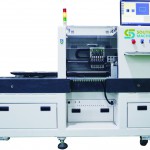
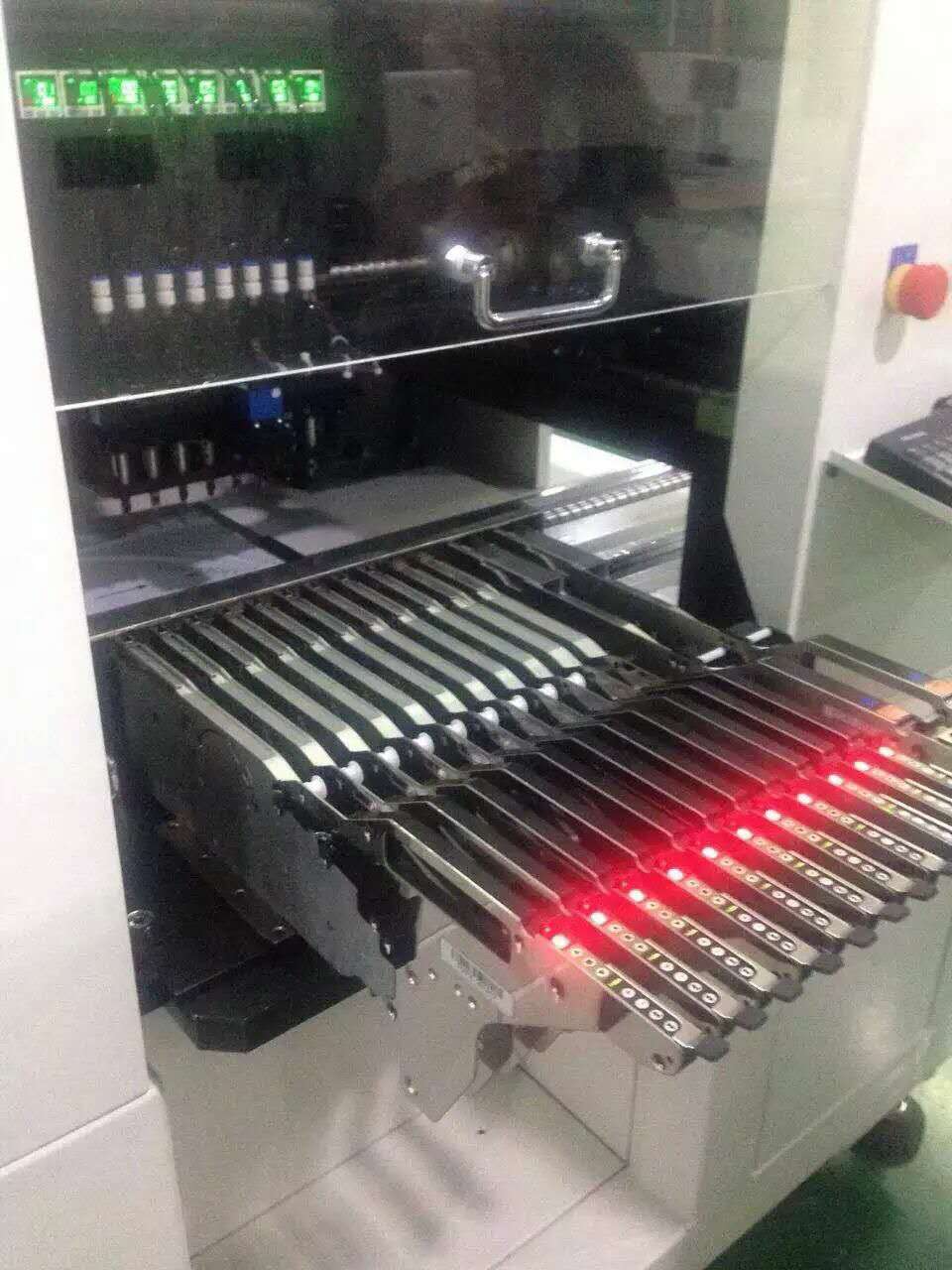
China SMT pick and Place / Auto Insertion machine Import Exp ort Statistics 2015

China SMT pick and Place / Auto Insertion machine Import Export Statistics 2015
Import Data
Duration Product Name Qty (Set) Price (usd) Qty Average Monthly M/C Price Average
Jan~Nov 2015 Pick and Place M/C 7551 1092061772 686 US$144,625
Export Data
Jan~Nov 2015 Pick and Place M/C 2119 81448484 193 US$38,437
Import Data
Jan~Nov 2015 Auto Insertion M/C 332 45353734 30 US$136,608
Export Data
Jan~Nov 2015 Auto Insertion M/C 235 6538941 21 US$27,825
Data from: http://www.customs-info.com/Trade/Commodity.aspx

Panasonic vs Universal Radial Insertion machine for PCB Through Hole assembly

Panasonic Radials

About Panasonic

Panasonic is a division of Matsushita (Japan), one of the largest companies in the world. They are highly vertically integrated in that they manufacture Radial componentry, Radial insertion equipment and end products with PCB’s populated with Radial components (consumer electronics, for example). This structure affords them some advantages and disadvantages. The advantages include:

  1. first hand experience using equipment,
  2. in-house production testing prior to release of new equipment designs,
  3. ability to sell components and equipment,
  4. keen understanding of market trends, new componentry and design considerations from both componentry and end product perspectives.

One glaring disadvantage is that many times their customers are also their competitors–this sometimes causes conflict of interest.

Machine Design:

RHS

The RHS was introduced in late 1998. It operates at a maximum speed of 14,400, and is different from previous Panasonic Radials in 2 main areas:

  • it uses a sequencer design
  • it no longer uses guide pins

Advantages

The sequencer and insertion head designs that Panasonic adopted carry many of the same advantages as the Radial 8. The additional advantages are:

  1. Auto Recovery is still fast (8 – 10 seconds), even though the RHS uses a sequencer. The sequencer chain is bi-directional, and increases speed when only travelling with a component.
  2. 30% smaller footprint. Even with a sequencer, the RHS footprint is smaller than the Radial 8.
  3. 1800 head rotation, although this feature slows down the machine.

Disadvantages

The main disadvantage for Panasonic is that they have no prior experience with this design. The RHS, consequentially, has gotten off to a bumpy start. However, we anticipate the experience gap to close quickly.

RH II & RH III

Shuttle Design

The RH II and RH III utilize a component shuttle system to bring the components to the insertion area.

Advantages

The advantage of a shuttle system is that “automatic recovery” (repair) can take place quickly. Once a misinsertion is detected, a replacement component is automatically dispensed and inserted into the original location. Manufacturers desire this feature as it leads to less operator interface and it ensures that the correct component is reinserted in the correct position and polarity. This recovery mode is selectable and may be programmed to attempt up to ten (10) “auto recoveries” before the machine stops. This feature reduces operator interaction and ensures the correct component is inserted.

Disadvantages

The shuttle design has two negative impacts on the inserters throughput capability:

  1. Depleted components cannot be replenished “on the fly”, because the entire shuttle system (all reels/packs) moves to deliver a component to the insertion area. The inserter must be stopped to replenish reels/ammo packs. To improve this situation the RH III utilizes a split shuttle (2x 40 inputs = 80 total). While this improves this flaw, it does not eliminate it. Components must be double-loaded to take advantage of this feature and maintain production.
  2. The specific component location on the shuttle effects throughput. Shuttle travel time must be added for each insertion cycle. Reels located at the end of the shuttle system (furthest from the head) will have a longer insertion cycle. This also requires increased machine programming in order to optimize the component location, and maintain throughput at an acceptable level.

Guide Pin System
The RHII and RHIII use guide pins instead of an insertion head. The pins come up from the clinch through the holes in the PCB guide the component leads into the PCB while the component is pushed from the top.

Advantages

The guide pin system provides excellent topside insertion density capability. However, the cut and clinch, which determines their bottom side density, has a footprint similar in size to that of the Radial 8.

By comparison, the Radial 8 utilizes insertion tooling to guide the component leads into the hole. The footprint associated with the Radial 8’s insertion head tooling limits the overall topside insertion density capabilities in comparison to Panasonic’s guide pin design. Panasonic’s guide pins allow for a component to be inserted with only .5mm clearance on all four sides.

Disadvantages

The guide pins are delicate and have a tendency to wear and break. They are only (.040″) 1mm in diameter and approximately 6″ long (152mm). Operators typically carry “spare” pins in their pocket.

Panasonic Machine types

Panasonic, like Universal, has a number of machine styles. The RH, RH6, RHB, RH6B, RH II and RH III insert 5mm components with two or three leads and are capable of 2.5mm insertion (2 leads) as an option. These older models differ in the number of input locations and the size of the components they can insert. The RH II features 80 input locations on a split shuttle (40 + 40), with a cycle speed of 7,800 CPH (maximum on certain components) vs. 6,000 CPH on other older Panasonic Radial Inserters. The RH III is similar to the RH II, but it is available as a 40, 62, and 80 station machine configurations. The RHUP and the RHU are Panasonic’s large component insertion machines that feature body diameter capability of up to 18mm and 7.5mm lead pitch. The RHU “special”, features a body diameter capability of 20mm and up to 10mm lead pitch. These machines are very slow and expensive.

The main advantages of the RH III over the RH II is its price, speed, and automatic recovery features. It also appears to be priced well below their previous machine models, with pricing estimated at 226K-270K (US$) and a maximum speed of 10,000 cycles per hour. The RH III’s only “real” performance advantage when compared to the Radial 8 is in terms of its insertion density as discussed earlier in its use of guide pins. However, this can be offset by the Radial 8’s throughput and reliability.

Panasonic offers a complete product line in both IMC and SMC technologies. All Panasonic inserters (RH II, RH III and AVK) use a shuttle design to deliver components to the point of insertion.

Two (2) Axial Inserters; Models AVK and AVK

A Jumper Wire Inserter; Model JVK

Odd Form Inserter; Model U2 (which also inserts DIP components), Square Pin Inserter, Model P, Round Pin Inserter, Model G, Eyelet Inserter, Model E

All are designed with board handling capability.

Although Panasonic’s presence is global, their main thrust in IMC has been in Japanese and Korean multi-national companies. They have a large installed base and as a manufacturer of electronics end products, they utilize much of their equipment in their own plants and influence their many sub contractors to utilize Panasonic equipment as well.

Panasonic’s pricing strategy varies depending upon the geographic location account and the specific situation. In the United States, for example, in comparison to the Radial 8, Panasonic’s RH product line is much higher in price (although they typically discount between 10 and 15%). In Southeast Asia, however, their prices are much lower and in some cases their prices have been considerably less than UIC’s (up to 30-40% below UIC list price).

Circuit board cleaning machine

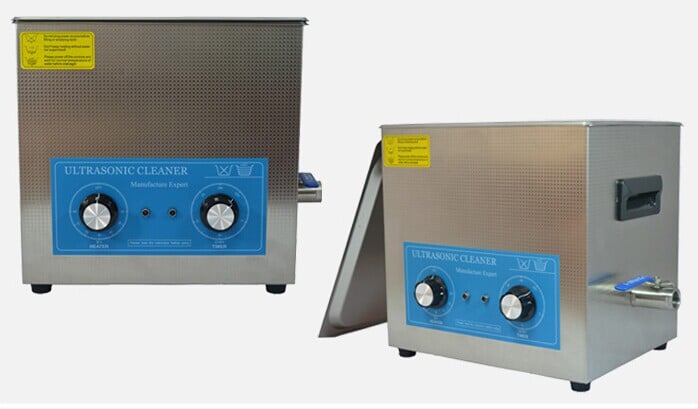
Today I will share a kind of useful cleaning machine for electronic enthusiasts friends.

This is the manual control 10L liter heated ultrasonic circuit board cleaning machine supplied from China manufactures, it is a perfect ultrasonic cleaner for PCB circuit board cleaning. This ultrasound cleaning machine is designed with mechanical rotary swith for easily to set working time and temperature.

This kind of cleaning machine can apply to many equipment.For example,you can use to ultrasonic PCB cleaner for cleaning PCB circuit board, PC mainboard , ultrasonic carburetor cleaner for cleaning carb,engine and fuel injector.Also you can use it to ultrasonic tattoo cleaner for cleaning tattoo equipment, guns, etc.
You may want to know how about the shaver heads, razor blades, pen-heads, printer-heads, inkjet cartridges and seals, ancient coins, badges, valves, machine nozzles, electronics components?Thet are small and have a complex structure.But,please rest assured,that can not defeat it,it just like a superman,omnipotent.

New announcement

ETA and Southern Machinery provide in EMS/LED Industries ETA  and
Southern Machinery have a joint-agreement to sincerely service the customers .Our commitment to service our customers, providing them with the best solution.
ETA
and Southern machinery partnership will provide customers with feasible and
economical solutions to equip their plants with state-of-the-art assembly
equipment from China. We will provide effective and on-time after-sales support
reliably.
In
recent years, China-made PCB assembly equipment has improved on their safety and
efficiency. China is fast becoming a leader in EMS/LED-related markets. The
production in China is very competitive in good quality and low price. With
ETA s expertise in solutions, we are able to provide cost-effective solutions
with low maintenance cost.
ETA and
Southern Machinery ‘s common goal :
Listen
to  customers and be clear with customers’ requirements in Auto Insertion
and SMT market;
Recommend
customers’  the most suitable solution with the best price;
Provide
the best after-sales-service;
Adhering to the “One Belt And One Road” thought, spread
our advanced equipment and technology
to all over the world.

TDK Radial Insertion machine for PCB assembly

TDK Radials TDK is a Japanese manufacturer and supplier of both radial components and Radial insertion equipment. Unlike other Japanese companies, TDK is not vertically integrated in that they do not produce end products. In the past, they did not have dedicated Axial or DIP insertion equipment; this served as a deterrent to customers desiring to buy all their insertion mount equipment from a single source. In 1995, TDK addressed this issue by teaming up with ex-Dynapert personnel to design an Axial component inserter. This agreement produced the AC7 in 1996, followed by the ACS-2 Axial Sequencer.
Similarly, TDK’s Radial Inserter’s are not manufactured by TDK. Instead, they are manufactured by Okuma, Japan, which also produces other TDK products. Machine Design : The VC7B, VC7C, and now VC-21S machine designs incorporate a sequencer chain that delivers sequenced components to the insertion area, much the same as UIC’s Radial. The main advantage associated with a sequencer design over a shuttle design (such as Panasonic) is greater throughput speed. The component location does not effect throughput speed, and allows for replenishment of depleted components without interrupting production.
VC-21S
In late 1999 TKD introduced the VC-21S, a Radial inserter with a maximum speed of 15,000 cph. Available either as a 2.5/5.0 mm or 5.0/7.5 mm lead span machine, The VC-21S is equipped with an Auto Recovery feature. Additionally, the VC-21S operated with Windows NT. It is available in 40, 80, or 120 stations.
Although the VC-21S has been advertised, no further information is available at this time. VC7B & VC7C Horizontal Transfer There is one fundamental difference between the Radial 8 sequencer design and TDK’s design. The VC7A/B/C series transfers the components by grasping the cardboard carrier tape of the component and carrying it horizontally. During the component transfer from the chain clip to the insertion head, the component is rotated 90 degrees to a vertical position and the cardboard tape is cut from the component. The component is then ready for insertion into the PCB, but must be transferred one more time to the insertion head.
Advantages
When equipped with certain optional features, various processes can be exercised on the component while it is being transferred on the sequencer chain. Components may be electrically verified for capacitance, resistance, and inductance. Minor bends in the leads may be corrected (straightened) by a reforming unit (standard on the VC7B). Components may be rotated using the four position component rotator for insertion of polarized components but not for insertion tooling density clearance issues. However TDK’s process requires an increased number of component transfers. TDK does not offer a rotary table, which is one reason why they offer the component rotator.
Disadvantages:
1) Horizontal component transfer increases the frequency a component is handled, increasing the possibility of mishandling and mis-insertions. In contrast, the Radial 8 carries the component to the insertion area vertically by the component leads, reducing the “handling” to a single step once the component is placed in the carrier clip.
2) The VC7A/B/C series machine must slow down and therefore reduce productivity for certain component types depending on type and size.
3) The VC7A/B does not offer an auto recovery capability, while the Radial 8 features auto recovery as a standard feature.
4) Like the Radial 8, TDK can employ a soft touch pusher motion when inserting delicate components (stamped leaded parts, for example). However, unlike the Radial 8, this programmable feature slows down the machine. UIC’s soft touch pusher design is utilized for all insertions and does not effect cycle speed, but rather enhances insertion reliability for all components being inserted.
Until the release of the VC-21S in late 1999, The VC7C was TDK’s current Radial offering, a 2.5/5.0 mm lead span machine designed to insert traditional Radial components and radially taped “odd form” type components such as tact switches, potentiometers, and fuse clips. The VC7C can insert components with a maximum body diameter of up to 11mm and is available in three sequencer sizes; 40, 80, and 120 feeder stations.
Options available on TDK’s Radial machines include the four direction reverse unit, reforming (lead straightening) unit (standard on the VC7B), parts checker (verifier), component supply warning (low parts sense) unit, optical correction device (BEC), and board handling (which may include automate PCB width adjuster). Axial Equipment TDK offers also offers limited Axial insertion equipment. The AC7 single head inserter with a 16,360/hour cycle rate. They also offer a ACS-2 Axial component sequencer with up to 180 stations. TDK’s product line also includes a full line of SMC products. Distribution & Pricing Strategies TDK’s presence is global and they maintain a large installed base. Their pricing strategy is both geographic and situation specific. TDK’s prices tend to be lower and their allowable discounts tend to be higher in Asia and with multi-national accounts, than in other parts of the world.
We have seen aggressive discounting by TDK to acquire or in an attempt to retain key accounts in North America. When board handling is required, the Radial 8 with board handling allows UIC to be very price competitive with similarly configured VC7B/C. The price should be weighed against other factors such as features, capabilities and on a price/performance basis. While TDK’s machine is generally perceived as a reliable machine, when a hard failure does occur is has been difficult and time consuming to return the machine to production status. Also, there have been reports (especially in North America) of poor field service and replacement parts availability.

TDK Radial Insertion machine for PCB assembly

TDK Radials

TDK is a Japanese manufacturer and supplier of both radial components and Radial insertion equipment. Unlike other Japanese companies, TDK is not vertically integrated in that they do not produce end products. In the past, they did not have dedicated Axial or DIP insertion equipment; this served as a deterrent to customers desiring to buy all their insertion mount equipment from a single source. In 1995, TDK addressed this issue by teaming up with ex-Dynapert personnel to design an Axial component inserter. This agreement produced the AC7 in 1996, followed by the ACS-2 Axial Sequencer.

Similarly, TDK’s Radial Inserter’s are not manufactured by TDK. Instead, they are manufactured by Okuma, Japan, which also produces other TDK products.

Machine Design :

The VC7B, VC7C, and now VC-21S machine designs incorporate a sequencer chain that delivers sequenced components to the insertion area, much the same as UIC’s Radial. The main advantage associated with a sequencer design over a shuttle design (such as Panasonic) is greater throughput speed. The component location does not effect throughput speed, and allows for replenishment of depleted components without interrupting production.

VC-21S

In late 1999 TKD introduced the VC-21S, a Radial inserter with a maximum speed of 15,000 cph. Available either as a 2.5/5.0 mm or 5.0/7.5 mm lead span machine, The VC-21S is equipped with an Auto Recovery feature. Additionally, the VC-21S operated with Windows NT. It is available in 40, 80, or 120 stations.

Although the VC-21S has been advertised, no further information is available at this time.

VC7B & VC7C

Horizontal Transfer

There is one fundamental difference between the Radial 8 sequencer design and TDK’s design. The VC7A/B/C series transfers the components by grasping the cardboard carrier tape of the component and carrying it horizontally. During the component transfer from the chain clip to the insertion head, the component is rotated 90 degrees to a vertical position and the cardboard tape is cut from the component. The component is then ready for insertion into the PCB, but must be transferred one more time to the insertion head.

Advantages

When equipped with certain optional features, various processes can be exercised on the component while it is being transferred on the sequencer chain. Components may be electrically verified for capacitance, resistance, and inductance. Minor bends in the leads may be corrected (straightened) by a reforming unit (standard on the VC7B). Components may be rotated using the four position component rotator for insertion of polarized components but not for insertion tooling density clearance issues. However TDK’s process requires an increased number of component transfers. TDK does not offer a rotary table, which is one reason why they offer the component rotator.

Disadvantages:

1) Horizontal component transfer increases the frequency a component is handled, increasing the possibility of mishandling and mis-insertions. In contrast, the Radial 8 carries the component to the insertion area vertically by the component leads, reducing the “handling” to a single step once the component is placed in the carrier clip.

2) The VC7A/B/C series machine must slow down and therefore reduce productivity for certain component types depending on type and size.

3) The VC7A/B does not offer an auto recovery capability, while the Radial 8 features auto recovery as a standard feature.

4) Like the Radial 8, TDK can employ a soft touch pusher motion when inserting delicate components (stamped leaded parts, for example). However, unlike the Radial 8, this programmable feature slows down the machine. UIC’s soft touch pusher design is utilized for all insertions and does not effect cycle speed, but rather enhances insertion reliability for all components being inserted.

Until the release of the VC-21S in late 1999, The VC7C was TDK’s current Radial offering, a 2.5/5.0 mm lead span machine designed to insert traditional Radial components and radially taped “odd form” type components such as tact switches, potentiometers, and fuse clips. The VC7C can insert components with a maximum body diameter of up to 11mm and is available in three sequencer sizes; 40, 80, and 120 feeder stations.

Options available on TDK’s Radial machines include the four direction reverse unit, reforming (lead straightening) unit (standard on the VC7B), parts checker (verifier), component supply warning (low parts sense) unit, optical correction device (BEC), and board handling (which may include automate PCB width adjuster).

Axial Equipment

TDK offers also offers limited Axial insertion equipment. The AC7 single head inserter with a 16,360/hour cycle rate. They also offer a ACS-2 Axial component sequencer with up to 180 stations. TDK’s product line also includes a full line of SMC products.

Distribution & Pricing Strategies

TDK’s presence is global and they maintain a large installed base. Their pricing strategy is both geographic and situation specific. TDK’s prices tend to be lower and their allowable discounts tend to be higher in Asia and with multi-national accounts, than in other parts of the world.

We have seen aggressive discounting by TDK to acquire or in an attempt to retain key accounts in North America. When board handling is required, the Radial 8 with board handling allows UIC to be very price competitive with similarly configured VC7B/C. The price should be weighed against other factors such as features, capabilities and on a price/performance basis. While TDK’s machine is generally perceived as a reliable machine, when a hard failure does occur is has been difficult and time consuming to return the machine to production status. Also, there have been reports (especially in North America) of poor field service and replacement parts availability.

Universal Auto Insertion machine Axial Tooling History 1978-1999

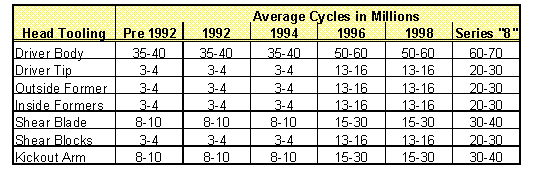
Tooling History 1978-1999

Pre 1992 tooling:
Standard tooling was first introduced in 1978 and used until 1992. In the mid to late 80’s, Universal Instruments Corporation developed several versions of 5mm tooling. Changeover from standard to 5mm required complete tooled housing. Insertion reliability for 5mm was significantly lower than standard tooling.
For Footprint specifications, refer to GS-110.

1992 tooling:
Available in Standard, high density, large lead, and 5mm (improved insert reliability).
Stronger inside former than older tooling.
Easy (tooling only) changeover between standard, large lead, hi-density, 5mm.
For Footprint specifications, refer to GS-173.
For Retrofitting, see Lotus Notes Axial Retrofit Catalog data base.

1994 tooling:
Available in Standard, high density, large lead, and 5mm (improved insert reliability).
Front cam rails are lengthened (extended) for longer life, smoother operation.
Driver bodies have oil grooves.
Driver bodies are easier to install because detents don’t try to fly out.
Top surface of housings have replaceable wear plates for shear blades.
Improved dentent action prevents binding when subjected to upward pressure from clinch.
For Footprint specifications, refer to GS-374.
For Retrofitting, see Lotus Notes Axial Retrofit Catalog data base.

1996 5 & 5.5mm tooling for Dual Head and VCD/Sequencer:
Not Available in Standard version.
Most tooling pieces increased life 300 to 400 percent.
Outside formers are slightly larger for more strength (footprint .090 x .090).
Outside formers have carbide for longer life.
Outside formers have a bigger bottom V to handle bent components better.
Outside former vertical groove is a true V to provide two lead contact surfaces for more secure lead holding capability.
Kickout arms and driver body cam surfaces have been redesigned for smoother operation.
Inside former and shear blocks are longer to work with the kickout/driver body changes.
New sequence tape guides feed bent components into head better than dual head VCD.
For Footprint specifications, refer to GS-367, except for outside former footprint. The GS has an incorrect footprint dimension.
For Retrofitting, see Lotus Notes Axial Retrofit Catalog data base.

1998 Standard Tooling Available for VCD/Sequencer Only:
Outside formers are slightly larger for more strength.
Outside formers have carbide for longer life.
Outside formers have a bigger bottom V to handle bent components better.
For Retrofitting, see Lotus Notes Axial Retrofit Catalog data base.
Outside former vertical groove is a true V to provide two lead contact surfaces for more secure lead holding capability.
Kickout arms and driver body cam surfaces have been redesigned for smoother operation.
Inside former and shear blocks are longer to work with the kickout/driver body changes.
For Footprint specifications, refer to GS-367, except for outside former footprint. The GS has an incorrect footprint dimension.
For Retrofitting, see Lotus Notes Axial Retrofit Catalog data base.

Series 8 high speed tooling (1999)
Designed for the higher insertions speeds of the VCD 8 series machines.
Same long life characteristics as the carbide 1996 5mm and 1998 standard tooling.
For Footprint specifications refer to GS-374.

Estimated Tooling Life* History

* Tooling life is highly dependent upon a number of factors. These factors include:
Lead composition variance
Lead diameter variance
Tooling maintenance
Working environment (dust, humidity, temperature, etc.)

What is IA — for Auto Insertion machine

“Intrinsic
availability” is the percentage of time that a machine would operate
based on downtime attributed to relevant interrupts and active repair or
recovery only.                    

IA = Productive time /  (Productive time + Repair time)  *100%

Field studies
indicate that Intrinsic Availability typically ranges from 95% to 99%. A
95% Intrinsic Availability means that 95% of the time the machine runs
without requiring operator intervention, beyond normal tasks such as
loading components. Five percent of the time requires operator
attention. 95% Intrinsic Availability translates into 24 minutes of
unexpected down time during an 8-hour full production shift. “Full
production” excludes scheduled maintenance, operators breaks, set-ups.
Intrinsic Availability does not affect board quality, but it does impact
throughput and utilization.


AI spare parts、Universal Parts,UIC,TDK.VCD Sequencer.SMT,THT,PCB,PCBA,AI,wave soldering,reflow oven,nozzle,feeder,wave soldering,PCB Assembly, LED, LED lamp, LED display, AI spare parts、Universal Parts,UIC,TDK.VCD Sequencer.SMT,THT,PCB,PCBA,AI,wave soldering,reflow oven,nozzle,feeder,wave soldering,PCB Assembly, LED, LED lamp, LED display, LED tube PCB 001 AI spare parts、Universal Parts,UIC,TDK.VCD Sequencer.SMT,THT,PCB,PCBA,AI,wave soldering,reflow oven,nozzle,feeder,wave soldering,PCB Assembly, LED, LED lamp, LED display, AI spare parts、Universal Parts,UIC,TDK.VCD Sequencer.SMT,THT,PCB,PCBA,AI,wave soldering,reflow oven,nozzle,feeder,wave soldering,PCB Assembly, LED, LED lamp, LED display, AI spare parts、Universal Parts,UIC,TDK.VCD Sequencer.SMT,THT,PCB,PCBA,AI,wave soldering,reflow oven,nozzle,feeder,wave soldering,PCB Assembly, LED, LED lamp, LED display,

Errors Symptom for SMT pick and place machine

We design and manufacture Odd Form component auto insertion machine,SMT equipment, and providing spare parts service. Worldwide Installation and on site support and training.


Pick Errors 

1

Comp. remains in pocket after pick

2

No part in pocket, no part on nozz, no part found

3

No part in pocket, no part on nozz, part on fdr

4

Component on side on nozzle

5

Component on end on nozzle

6

Component skewed (rotated) on nozzle

7

Component upside down on nozzle

Place Errors

1

Component on end on board

2

Component on side on board

3

Component is askew on board – part off pad

4

Component is upside down on board 

5

Comp. is shifted in x or y – part off pad

AI spare parts、Universal Parts,UIC,TDK.VCD Sequencer.SMT,THT,PCB,PCBA,AI,wave soldering,reflow oven,nozzle,feeder,wave soldering,PCB Assembly, LED, LED lamp, LED display,FUJI,SMT,Cp,XP,NXT,AIM,IP AI spare parts、Universal Parts,UIC,TDK.VCD Sequencer.SMT,THT,PCB,PCBA,AI,wave soldering,reflow oven,nozzle,feeder,wave soldering,PCB Assembly, LED, LED lamp, LED display,FUJI,SMT,Cp,XP,NXT,AIM,IP,DEK,Stencil,Screen printer,TDK,Siemens,Siplace

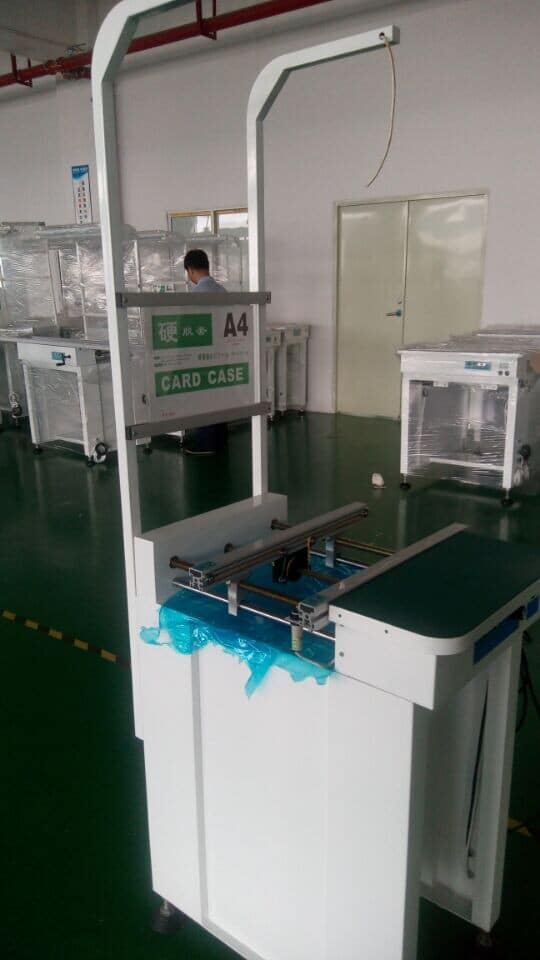
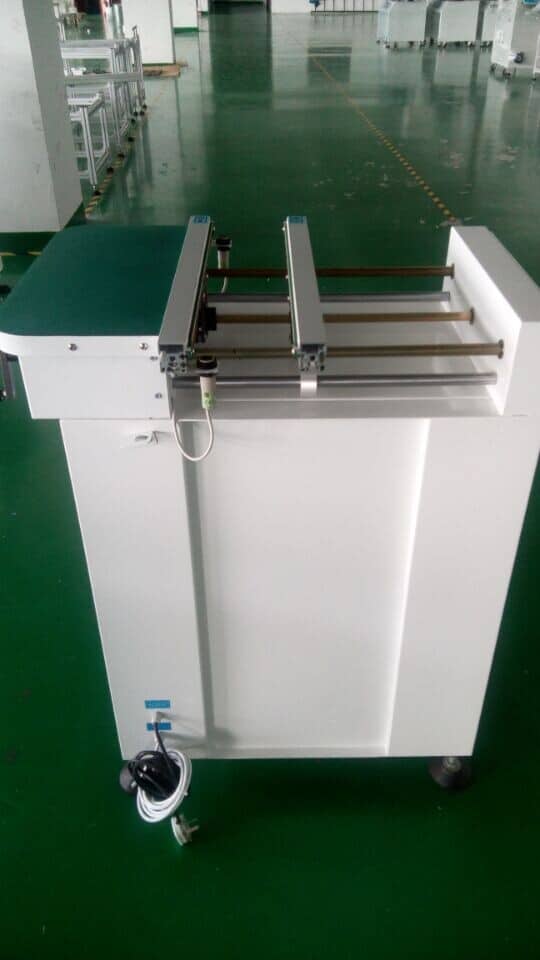
SMT line solution PCB Board Flow Conveyor Checklist

Customer  ____________________________________        Date  _____________________________

Old Serial Tag #  _______________________________        Equip #  __________________________

Prod Code  _____________ Description  __________________________________________

Qty  _______   RMD Identifier #  _______   Ord #  _____________   Prod Order #  _______________

Builder Name/Initial  ________________________________________           Clock #  __________

QA Technician Name/Initial  __________________________________           Clock #  __________

Shipping Clerk Name/Initial  __________________________________           Clock #  __________

1. Turn For Final Inspection Builder/QA Tech

A. Leveling legs are correct type (standard pass thru ______________

height or special).

B. Conveyor speed verified mode functions and board ______________

sensors set and operational.

C. Parallelism of rails set. ______________

D. Input voltage correct to order requirement. ______________

E. Conveyor length correct to order requirement. ______________

F. Board flow direction is to order requirement. ______________

2. Visual Inspection Builder/QA Tech

A. Check for dents, scratches and poor painting. ______________

B. Check for loose hardware.  ______________

C. Interfacing hardware including. ______________

D. Covers installed. ______________

E. Cables installed or packed in carton. ______________

3. Pre-Shipment Builder/Ship Clerk

A. Run Delivery Note. ______________

Builder/Ship Clerk

B. Verify all items on order are present. ______________

C. Properly package all items in carton(s) and/or power ______________

pack(s).

D. Fill out box content sheet. ______________

E. Label carton(s\) and/or power pack. ______________

F. Notify shipping clerk. ______________

4. Close Out Procedure Builder/Shp Clerk

A. Review Delivery Note with shipping clerk. ______________

B. Turn machine over to shipping clerk. ______________


AI spare parts、Universal Parts,UIC,TDK.VCD Sequencer.SMT,THT,PCB,PCBA,AI,wave soldering,reflow oven,nozzle,feeder,wave soldering,PCB Assembly, LED, LED lamp, LED display,FUJI,SMT,Cp,XP,NXT,AIM,IP,DEK,Stencil,Screen printer,TDK,Siemens,Siplace SMT conveyor 1 (3) AI spare parts、Universal Parts,UIC,TDK.VCD Sequencer.SMT,THT,PCB,PCBA,AI,wave soldering,reflow oven,nozzle,feeder,wave soldering,PCB Assembly, LED, LED lamp, LED display,FUJI,SMT,Cp,XP,NXT,AIM,IP,DEK,Stencil,Screen printer,TDK,Siemens,Siplace AI spare parts、Universal Parts,UIC,TDK.VCD Sequencer.SMT,THT,PCB,PCBA,AI,wave soldering,reflow oven,nozzle,feeder,wave soldering,PCB Assembly, LED, LED lamp, LED display,FUJI,SMT,Cp,XP,NXT,AIM,IP,DEK,Stencil,Screen printer,TDK,Siemens,Siplace AI spare parts、Universal Parts,UIC,TDK.VCD Sequencer.SMT,THT,PCB,PCBA,AI,wave soldering,reflow oven,nozzle,feeder,wave soldering,PCB Assembly, LED, LED lamp, LED display,FUJI,SMT,Cp,XP,NXT,AIM,IP,DEK,Stencil,Screen printer,TDK,Siemens,Siplace AI spare parts、Universal Parts,UIC,TDK.VCD Sequencer.SMT,THT,PCB,PCBA,AI,wave soldering,reflow oven,nozzle,feeder,wave soldering,PCB Assembly, LED, LED lamp, LED display,FUJI,SMT,Cp,XP,NXT,AIM,IP,DEK,Stencil,Screen printer,TDK,Siemens,Siplace AI spare parts、Universal Parts,UIC,TDK.VCD Sequencer.SMT,THT,PCB,PCBA,AI,wave soldering,reflow oven,nozzle,feeder,wave soldering,PCB Assembly, LED, LED lamp, LED display,FUJI,SMT,Cp,XP,NXT,AIM,IP,DEK,Stencil,Screen printer,TDK,Siemens,Siplace

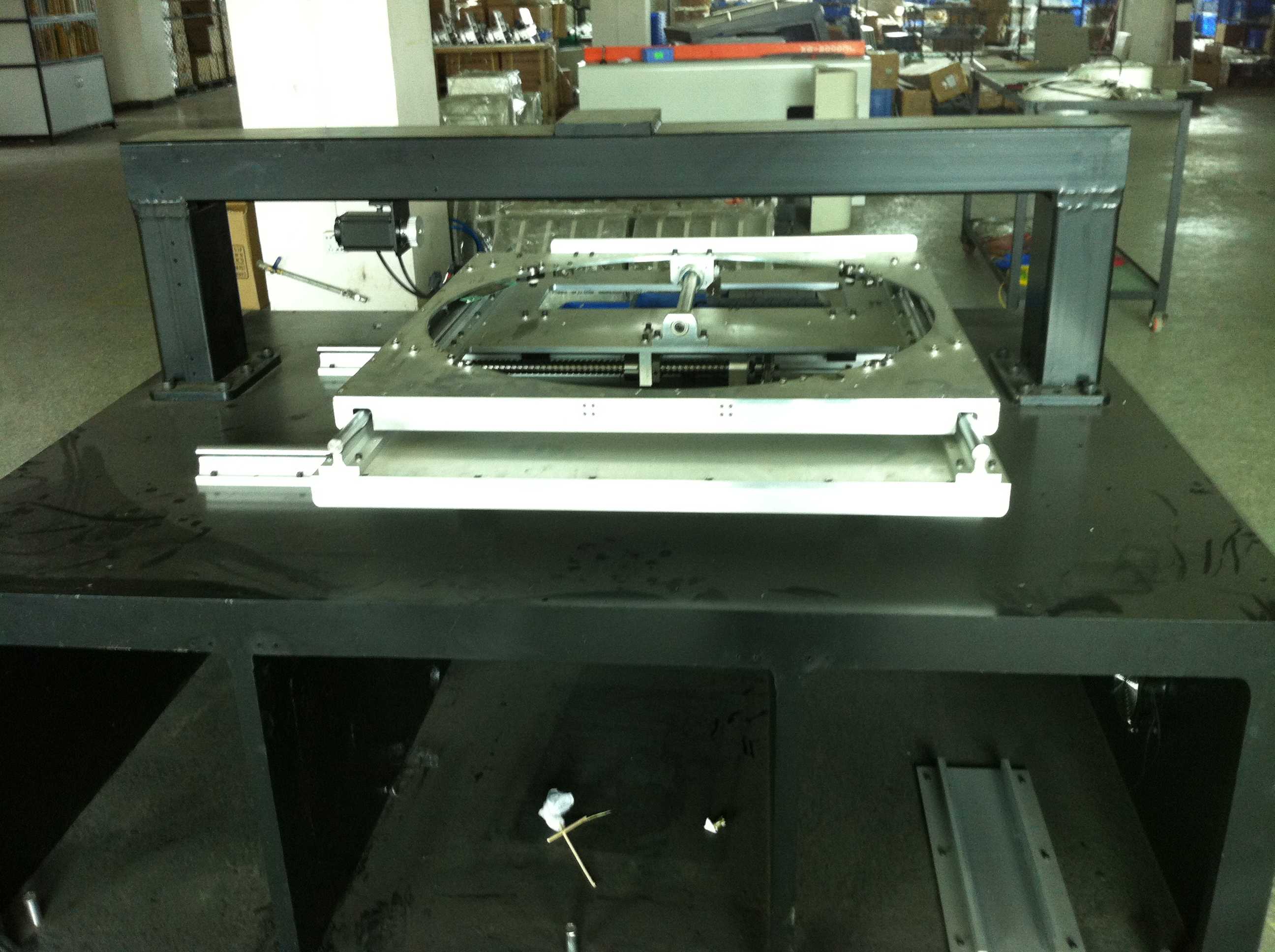
Radial Auto Insertion machine POSITIONING SYSTEM Check list

STEP & DESCRIPTION

Builder

Check base casting build.

Thompson shaft oriented torqued and lubed with 10w oil.       

Leveling pads mounted but not tightened.

Foam insulation in place.        

Check y & x frame build.         

Bearings & retainers mounted

Verify the x & y bearing preloads are set.    

Limit rails and limit blocks mounted and activate limit switches.

Tie clamps mounted.               

All brass pneumatics fittings installed.                        

Insure base, y frame, and x frame are mated together. 

Check build & installation of x & y paddles.

Hardware tight dowels in place.  

Bearings installed.               

Check x & y table movement.

Ball screw units installed and lubed.  

Motor, drive belt installed with proper belt tension adjusted.

Rotary disc installed.

Wheels mounted with proper hardware and internal tooth CSK.

Lock assy & drive motor installed & adjusted.       

Wheel cams adjusted so dowel pins fit through disc bushings into the x-frame bushings. 

Safety covers in place.          

Insure the positioning system cable harness is installed.

Insure limit actuators activate the limit switches.

Positioning system installed on lower console.

use loctite 271 and torque to 60 ft/lbs.) Adjust and lock down leveling pads

Insure that base frame leveling pads are seated against the console frame and locknuts tight.

AI spare parts、Universal Parts,UIC,TDK.VCD Sequencer.SMT,THT,PCB,PCBA,AI,wave soldering,reflow oven,nozzle,feeder,wave soldering,PCB Assembly, LED, LED lamp, LED display,FUJI,SMT,Cp,XP,NXT,AIM,IP,DEK,Stencil,Screen printer,TDK
POSITIONING SYSTEM – Table

AI spare parts、Universal Parts,UIC,TDK.VCD Sequencer.SMT,THT,PCB,PCBA,AI,wave soldering,reflow oven,nozzle,feeder,wave soldering,PCB Assembly, LED, LED lamp, LED display,FUJI,SMT,Cp,XP,NXT,AIM,IP,DEK,Stencil,Screen printer,TDK
POSITIONING SYSTEM – Table

AI spare parts、Universal Parts,UIC,TDK.VCD Sequencer.SMT,THT,PCB,PCBA,AI,wave soldering,reflow oven,nozzle,feeder,wave soldering,PCB Assembly, LED, LED lamp, LED display,FUJI,SMT,Cp,XP,NXT,AIM,IP,DEK,Stencil,Screen printer,TDK
POSITIONING SYSTEM – Table

AI spare parts、Universal Parts,UIC,TDK.VCD Sequencer.SMT,THT,PCB,PCBA,AI,wave soldering,reflow oven,nozzle,feeder,wave soldering,PCB Assembly, LED, LED lamp, LED display,FUJI,SMT,Cp,XP,NXT,AIM,IP,DEK,Stencil,Screen printer,TDK
POSITIONING SYSTEM – Table

AI spare parts、Universal Parts,UIC,TDK.VCD Sequencer.SMT,THT,PCB,PCBA,AI,wave soldering,reflow oven,nozzle,feeder,wave soldering,PCB Assembly, LED, LED lamp, LED display,FUJI,SMT,Cp,XP,NXT,AIM,IP,DEK,Stencil,Screen printer,TDK
POSITIONING SYSTEM – Table
AI spare parts、Universal Parts,UIC,TDK.VCD Sequencer.SMT,THT,PCB,PCBA,AI,wave soldering,reflow oven,nozzle,feeder,wave soldering,PCB Assembly, LED, LED lamp, LED display,FUJI,SMT,Cp,XP,NXT,AIM,IP,DEK,Stencil,Screen printer,TDK

Xi highlights poverty reduction, int’l role in New Year speech:SMT is looking forward to solutions from China

Let’s grow our ‘circle of friends’ .

http://www.chinadaily.com.cn/china/2015-12/31/content_22890743.htm

BEIJING – President Xi Jinping highlighted poverty reduction and China’s international role in his New Year speech Thursday.

In an address transmitted live by state broadcasters, Xi called for confidence and hard work for a good beginning in the home stretch of building a “moderately prosperous society in all respects.”

Xi said that a meeting of the Communist Party of China (CPC) in late October set out a promising and encouraging blueprint for development over the next five years.

Xi noted that lifting tens of millions of rural people out of poverty was his top concern, and called for joint efforts to achieve this goal.

“We should care for all people facing difficulties, making them feel warm from the bottom of their hearts,” Xi said.

It is the third New Year speech Xi has given since 2013.

PAINS AND GAINS

Xi extended his New Year wishes to Chinese people of all ethnic groups, compatriots in Hong Kong and Macao, compatriots in Taiwan and overseas Chinese, as well as friends from other countries and regions.

“In 2015, Chinese people gave a lot, and we received a lot too,” Xi said, citing the fact that the country’s economic growth continues to be among the fastest in the world, reforms are in full swing and there has been deepened judicial reform.

The “three stricts and three earnests” campaign and anti-corruption fight have also been improving the country’s political environment.

Xi recalled the large-scale commemoration for the 70th anniversary of victory in the Chinese People’s War of Resistance Against Japanese Aggression and in the World Anti-Fascist War. During the event, Xi announced China will cut troops by 300,000.

“Our commemorative activities and the grand military parade showcased the truth that justice will prevail, peace will prevail and the people will prevail,” Xi said.

Xi noted that his meeting with Ma Ying-jeou in Singapore in November and their handshake, the first between leaders of the two sides of the Taiwan Strait in 66 years, reflected the common wish of compatriots from both sides for the peaceful development of cross-Strait relations.

The president cited more milestone moments, including Beijing winning the bid to host the 24th Winter Olympics, the RMB’s inclusion into the currency basket of the Special Drawing Rights of the International Monetary Fund, China’s first homemade large passenger aircraft C919 rolling off the assembly line, Tianhe-2 supercomputer remaining the world’s most powerful system for the sixth consecutive time, the country’s first space telescope to search for signals of dark matter sent into space and Tu Youyou winning the Nobel Prize in Physiology or Medicine.

“All these show us that, as long as we persevere, dreams will come true,” Xi said.

“This year, we had joys, but we also had sorrows,” Xi said, recalling cruise ship Eastern Star capsizing, catastrophic fires and explosions at a chemical warehouse in Tianjin and the Shenzhen landslide.

“These accidents led to many lives lost, and it’s also deeply harrowing that our compatriots were cruelly killed by terrorists,” Xi said. “We mourn them, and hope that the deceased rest in peace and the living are safe and healthy.”

Recognizing that people still have difficulties and troubles, Xi vowed that the Party and the government will continue to make concrete efforts to protect people’s lives and property, improve their livelihoods and ensure their health.

INT’L PLAYER

China must not be absent from international affairs, as the world is looking forward to voices and answers from China, Xi said.

“The world is so big, the challenges so complicated, ” he said.

“For those people torn by hardship and war, we need to offer not only sympathy and compassion, but also responsibility and action,” Xi said.

“China will always welcome the world with an open embrace, and we will also extend our hand to those in difficulty as best as we can, and our ‘circle of friends’ will grow,” Xi said, borrowing a term from the popular messaging app WeChat.

Throughout 2015, Xi said, China’s leaders have taken active part in international conferences and diplomatic activity, bringing substantial progresses in the “Belt and Road Initiative,” while contributing to the United Nations 2030 agenda for sustainable development and the global fight against climate change.

He said, “We have only one earth, one home for the peoples of all nations.”

Xi expressed his earnest hope that the international community could work together for peace, in a spirit of cooperation. “By turning antagonism to synergy, hostility to friendship, together we will forge a community of shared destiny for all humankind,” said the president.