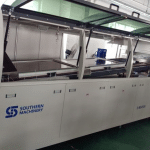
Southern Machinery provides professional SMT peripheral equipment

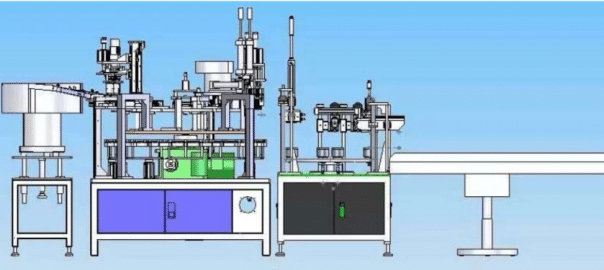

How to invest LCD TV Final Assembly factory
Volume Requirements
- Total estimated time to complete weekly- production volumes with proposed equipment set = 160 hours/per week (+/- 10%)
Notes:
- Available time is 80 hours (16hours x 5days)!
- Factory efficiency not optimum due to:
- Weekly Scheduling
- Bottle Neck is SM Lines (Top/Bottom)
- Occupation of Lines, High Volume PC’s
- For schedule improvements we propose:
- To add and reconfigure SMT lines, create dedicated HV PC & PC Monitor SM lines
- Increase inventory, make longer runs, increase weekly batches, warming up Factory
IM Lines

- Number of Lines : 3
- Machine Set: Radial S-3000 x 3, Axial S-4000 x 3
- Cycle time: Average 15 seconds
- Intrinsic Availability: 90%
- Mean Time To Repair: 120 seconds
SM Lines
- Number of Lines : 4
- Machine Set: High Speed Chip mounter x 2, IC mounter x 1
- Cycle time: between 12.60 & 25.29 seconds
- Intrinsic Availability: 90%
- Mean Time To Repair: 120 seconds

MI Lines
- Number of Lines : 4
- Machine Set:
- 10 x Assembly stations,each line
- Delta 5 Wave Solder, each line
- 4 x Test & Inspect stations, each line
- Average Cycle Time: 25 seconds

LCD TV FA Lines
- Number of Lines : 2
- Machine Set:
- 16 x Assembly stations
- 3 x L-Shape Soak System 30 min
- Simulation Soak is 30 min with 30 stations x 3
- Final QC/Test and Pack Out, 3 stations
- Two identical Lines (19” to 42”) for optimum Efficiency & Flexibility
- Average Cycle Time: 24 seconds/station


Why SMT? How to EMS?
Why SMT?
Manufacturers continuously evaluate new components and systems technologies in terms of reducing size, increasing design flexibility, improving reliability and reducing cost for systems. SMT satisfies all these requirements. It can provide size reductions of over 40%, assembly cost reductions of almost 50%, and can enhances the performance of electrical circuitry [Lea, 1988].
SMT Reduces Size and weight
The increased density of components can lead to a higher functionality in the same space. This allows the system manufacturer to price differentiate his product in the market by carefully choosing his components.
- SMT components require less circuit board area and volume than their through-hole equivalent.
- Components can be mounted on both sides of boards.
- Lighter components with the same functionality can be significant in the
aerospace industry as well as portable consumer electronics.
SMT Increases Performance
- SMT offers better interconnectivity due to shorter paths, providing lower inductance and capacitance.
- SMT reduces the package propagation delay, which is the time the signal needs to move from one component to another. Typically the longest delays in the system are off-chip.
- Electromagnetic interference can be decreased by combining sensitive circuits on a single board and improving its Electromagnetic Induction (EMI) shield design.
SMT Improves Reliability
- The smaller and lighter construction of SMC’s allow them to resist shock and vibration better than their through-hole counterparts.
- The reduced number of PCBs and connectors improves overall reliability at the system level.
- However, SMT systems require careful attention to mechanical design to avoid overstressing the solder joints.
- The demanding nature of the SMT process has resulted in extensive automation and corresponding increases in product quality.
-
SMT Reduces Cost
• Bare Boards
The use of SMT, typically, results in smaller area PCBs being used due to the reduction in the size of the components being used. In general for two functionally equivalent PCBs, one utilizing surface mount and the other using conventional through hole, the larger the PCB, the more expensive it will be. Increased density on an SMT board generally requires multiple layers as well as smaller line widths and spacings to accommodate the finer pitch components and smaller hole diameters to interconnect the layers. The only time a hole is required is to carry the signal to another layer whereas with through hole components there must be a hole for each lead of each component. In some cases through hole PCB’s may require more layers because there are more larger holes which means there will be less room on the inner layers for circuit routing increasing the layer count.• Processing
Surface mount components have almost all been designed for automatic assembly. Many unusually shaped, through-hole components, called odd- formed components, which were designed for hand assembly, can now be placed automatically as well. Automated assembly of surface mount assemblies can be done using one flexible automated placement machine whereas several machines may be required for the various through hole components.
As more types of components become available in a surface mount format, correspondingly fewer components are available in through-hole configuration forcing the cost of many SMC devices down. While through-hole components can be automatically inserted, the combined equipment, floor space and processing costs are higher.
• Factory Operating
Fewer types of assembly machines are required for an SMC assembly line and they often requires less floor space. Automated SMT assembly lines are considerably more productive than PTH assembly tools. Thus throughput is raised considerably with SMT manufacturing and the cost per unit of assembly is greatly reduced.
SMT Increases Flexibility
- SMT provides a wider range of packaging possibilities than insertion mount technology.
- SMT allows for the use of both surface mount and insertion mount devices in the same assembly.
SMT Eases Handling And Storage Space Needs
Surface mount components are easy to handle due to the various storage formats in which they are shipped and presented to the pick and place machines. Tape and reel, cartridge, sticks, magazines, and matrix trays allow effective and safe handling and shipping. The storage formats have the following features:
- Large number of components per packing unit resulting in less frequent loading of the tools.
- Small amount of packing materials per component resulting in lower shipping and inventory costs.
- Protection against transport and handling damage.
- Standardization, Definite orientation of the components.
- Protection against electrostatic discharge resulting in fewer defective systems
and rework.
- Compatible with highly automated equipment.
Electronic Industry Organizations and Groups
Uniform Standards for Surface Mount Technology are still under development in the USA, Europe and Japan. Although much has been accomplished, there is still no single set of industry guidelines. However, efforts are being taken to resolve this problem. For example, there was inconsistency in the standards set by the IPC and the EIA. As this was recognized, they have joined forces to set up a council called Surface Mount Council, to coordinate the various standards between the users and the developers of these standards. These documents have a J-STD- xxx designation. Moreover, other organizations like the International Microelectronics and Packaging Society (IMAPS) are working together on the technical issues in the PCB industry. These developments are promising and should lead to a common industrial standard in the near future.
IPC- Association Connecting Electronics Industries
2215 Sanders Road Northbrook, IL 60062-6135 USA Tel: (847) 509-9700 Fax – (847) 509-9798
Internet: www.ipc.orgIn 1999, IPC changed its name from Institute of Interconnecting and Packaging Electronic Circuits to IPC. The new name is accompanied with an identity statement, Association Connecting Electronics Industries.
IPC started in 1957 as the Institute for Printed Circuits. As more electronics assembly companies became involved with the association, the name was changed to the Institute for Interconnecting and Packaging Electronic Circuits. In the 1990s, most people in the industry could not remember the name and/or didn’t agree on what the words in the name meant. In addition, the leaders from government or other business groups could not understand the name either.
PC Board Handling Improvements in AI Equipment and Machines
PC Board Handling
Improvements in AI Equipment and Machines
Improve ROI with fast tracking your https://finasteridehair.com current Universal Insertion Machine to an Automatic Board Handling System

Stay ahead of PCB Manufacturing! The digital curve is constantly bending toward demands for digital devices with increased capabilities and FASTER availability. By using the equipment you already own, you can improve upon its capabilities to meet these growing demands. We will use your current Universal Insertion Machine’s capabilities to transition it to an Automatic Board Handling System that will speed up processes and accomplish maximum PCB production successfully.
We at Southern Machinery have the solution to your distinct Automatic Board Handling needs. Whether you require Magazine-to-Magazine Configuration, Destacker/Conveyor-to-Magazine Loader Configuration, or In-line Configuration, we can serve to improve your PCB assembly line.


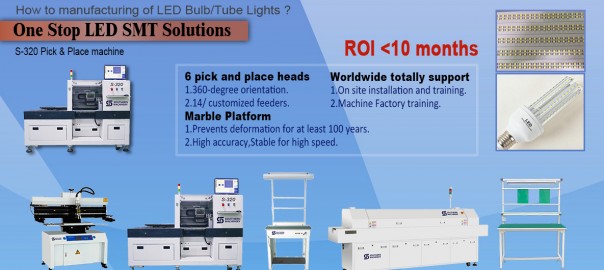
LED Manufacturing 💡🔦
Bright Idea! Stop importing from China and Invest in LED Assembly Equipment
MARKET DEMAND FOR LED MANUFACTURING

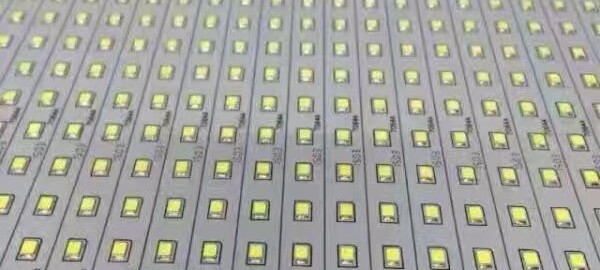
Today, LEDs are used for bulbs and tubes but increasingly they are being used in the many lighting components necessary for automobiles, airplanes, appliances, computers, electronics, televisions and more. LEDs use a whopping 80% less energy than old Incandescent Lighting and 50% less than Compact Fluorescent Lighting. Soon, international mandates to deal with climate change, like the Paris Agreement, will make an already huge market, topple over with growth and opportunity.
LEDs offer a promising solution to deal with energy agendas set forth by conventional international treaties and local environmental policies that seek to gain quantifiable reductions in fossil fuel usage. LEDs are a simple, yet integral solution to improving energy efficiency and helping to solve the issue of climate change. Are you keeping up with the Paris Agreement and what that means for a BOOMING LED Market?

Souther Machinery provides full-service equipment for LED Manufacturing Solutions. Please call us at 0755-83203237 if you would like more information about our LED SMT Manufacturing Technologies and to discuss how we can help you participate in this expanding global market.

Share this Entry


Your PCB Assembly Quality Checklist ✏
We have EVERYTHING you need…
Your PCB Assembly Quality Checklist

 After many requests, we are thrilled to announce our Industry Leader Newsletter. As an Industry Leader, Southern Machinery wants to provide your company with the same excellence we put into our equipment and services. We know your job is important and you must always stay ahead of trends in PCB Assembly. Changes in labor costs, shifting environmental laws and policies, energy conservation efforts, advancing industries, international trade politics, etc., are causing a reemergence of in-house manufacturing systems to be put into place. The tide has shifted and it is now time to begin transitioning to a more self-sufficient manufacturing system.
Welcome to our smthelp.net Newsletter! No matter what your company role is, this Newsletter will keep you up-to-date with the most important topics and events that affect the quality and profitability of your manufacturing systems. If it has been a while since we last spoke, stay tuned! We will be delivering important PCB topics to your inbox. In the meantime, we have put a quality checklist together for you!
Your Manufacturing Quality Checklist here:
- Do you have ROI-Driven Design and Implementation of reliable PCB Assembly Equipment?
- Is your equipment Low-Cost with High-Intelligence?
- What is the speed of your PCB throughput?
- Is your efficiency high?
- Is your productivity high?
- Are you increasing your profits by using affordable and reliable equipment?
- Is your short-term investment low?
- Is your long-term investment low?
- Have you eliminated hand insertion for Automatic Insertion for improved time and profits?
- Finally, have you eliminated your import fees by producing your own PCBs?
Share this Entry
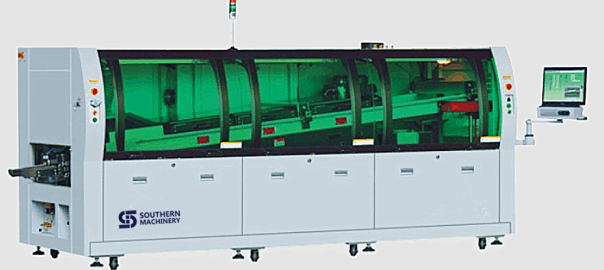
Welcome home — Shenzhou XI and Congratulations on Southern Machinery’s Wave Soldering machine successful ship out to overseas
Today, the Shenzhou XI spaceship will come back to the Earth after a monthlong mission in the space.
Find below video channel and know how China made SMT AI machine.
1,SMT pcb assembly LED
https://www.youtube.com/channel/UClX0iEG2bvJq8yUBEDamgDw
2, Through hole technilogy
https://www.youtube.com/channel/UC6Pj74wjjEjtp-jneRoSL9Q
3,SMT Machine For PCB Assembly
https://www.youtube.com/channel/UCke0s_OM0eKflD8WmGSLm5A
4,Odd Form Insertion Machine/Feeder
https://www.youtube.com/channel/UCactVXP8IrU3l-vItOODRCA
https://www.youtube.com/channel/UCMuFHjsSuaIXnc3_3yNcwzw
6, Stencil Cleaner Machine Southern Machinery
https://www.youtube.com/channel/UCnMRyXlBFqJZHYuqaZVoK4Q
7, LED Mounter
https://www.youtube.com/channel/UC4Z_P3S6qAYLHnlE-DU2OSA