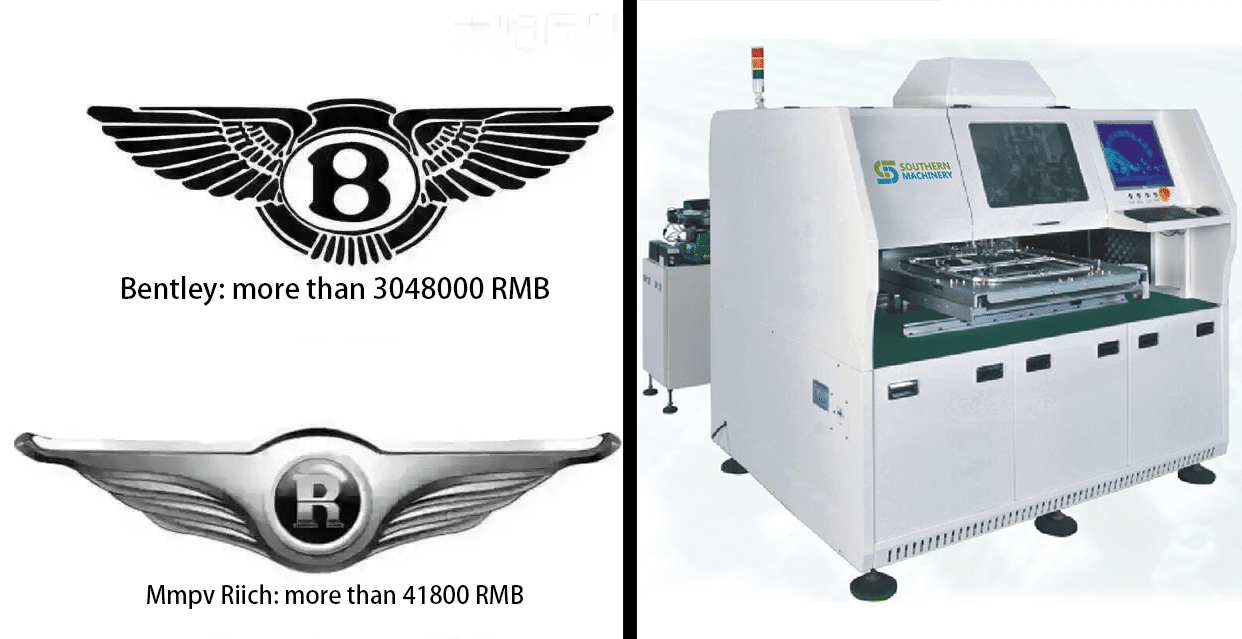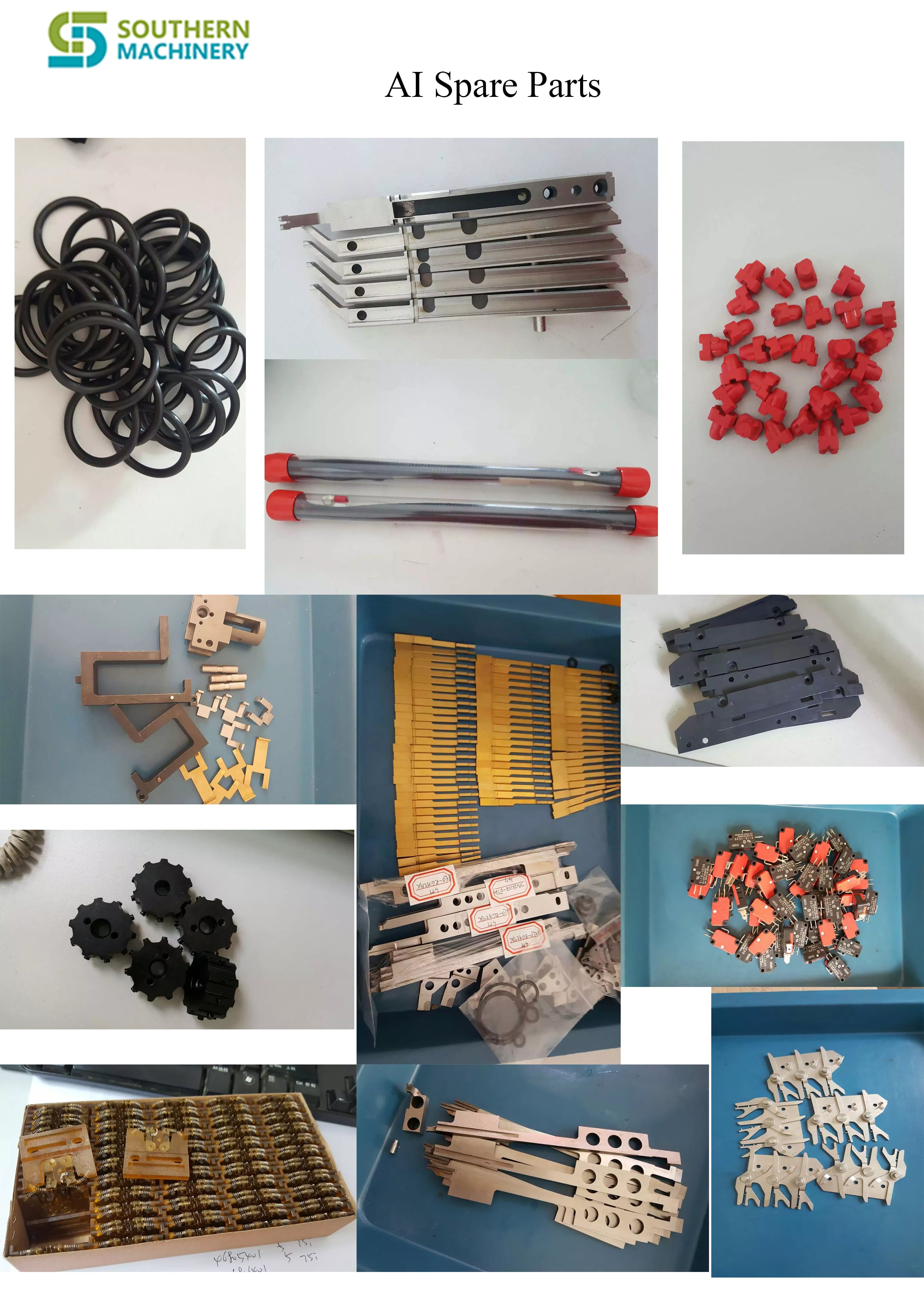
We are professional AI spare parts ,we can provide the orginal new and the high copy one ,and guarantee the quality and have responsible service.

We are professional AI spare parts ,we can provide the orginal new and the high copy one ,and guarantee the quality and have responsible service.

Before the manufacturing course begins, business necessities require an in depth verification and comparability of product design vs. manufacturing outcomes, often called First Article Inspection (FAI). Frequently used within the aerospace, medical electronics and automotive industries, FAI studies have gotten an ordinary course of to make sure high quality and consistency of the ultimate product is in order. Although conducting FAI could be advanced, technological developments and person pleasant software programs have allowed customers to implement and execute this course of shortly and precisely.
As an official authentication technique for production, FAI intention is to overview and authorize dimensional studies. FAI stories make the most of dimensional properties of a manufacturing like design specs, to make sure of consistency or uncover any deviations. This inspection ensures reliability and repeatability of the manufacturing course, in addition to making certain the producer’s capability to provide elements in accordance with specifications.

What is the aim of FAI?
The goal of a FAI report outlined below:
FAI studies are crucial when any of the following occur:
Before proceeding with manufacturing elements, FAI studies will be helpful in figuring out whether or not a production course of action is able to deliver elements constantly within design parameters. Furthermore, FAI studies present construction between buyer and provider for understanding and verifying the final mission necessities. FAI additionally assists buyer and provider with communications and help to avoid future miscommunication. This course of action additionally ensures that you will be using the precise supplies and instruments, offering an efficient initiative for the anticipated outcomes for manufacturing.
A full FAI requires that each field has been accounted for. With a partial FAI report, any subject missed will affect the FAI sucess. In regards to any excellent fields, they might be crammed out at a later date or utilizing earlier knowledge, on condition that it applies to the precise traits of duplicate elements produced by the identical manufacturing course of action.
Before the primary manufacturing beings to run elements, many components have to be accounted for with the intention to execute FAI planning, which generally embrace the following:
Records for the manufacturing course of action– manage actions to be executed all through FAI course of and accountable suppliers/organizations.
Ensure authorized materials sources, laboratory and relevant manufacturing, planning, routing and buying are in accordance with the specifications.
Waste Streams from Printed Circuit Board Manufacturing
Waste Stream Waste Stream
Waste Source Description Composition
Cleaning/Surface preparation 1. Airborne particulates
2. Acid fumes/organic vapors
3. Spent acid/alkaline solution
4. Spent halogenated solvents
5. Waste rinse water
Catalyst application/
Electroless plating
1. Spent electroless copper bath
2. Spent catalyst solution
3. Spent acid solution
4. Waste rinse water
Pattern printing/masking 1. Spent developing solution
2. Spent resist removal solution
3. Spent acid solution
4. Waste rinse water
Electroplating 1. Spent plating bath
2. Waste rinse water
Etching 1. Spent etchant
2. Waste rinse water
Board materials,
sanding materials,
metals, fluoride,
acids, halogenated
solvents, alkali.
Acids, stannic
oxide, palladium,
complexed metals,
chelating agents.
Vinyl polymers,
chlorinated
hydrocarbons, organic
solvents, alkali.
Copper, nickel, tin,
tin/lead, gold,
fluoride, cyanide, sulfate.
Ammonia, chromium,
copper, iron, acids.
Profesional in AI/SMT machine and spare parts of AI/SMT .
1.We have original drawing ,what we can make is almost the same quality with original spare parts.
2.All the process when manufactured ,our engineer would give guide and test the quality.
3.Only when the qulity is passed will we let the parts into our store.
4.Also we can control our spare parts in a very low price, when control it on a good quality.


Electronics manufacturing using surface-mount technology (SMT) simply means that electronic components are assembled with automated machines that place components on the surface of a board (printed circuit board, PCB).

Electronics manufacturing using surface-mount technology (SMT) simply means that electronic components are assembled with automated machines that place components on the surface of a board (printed circuit board, PCB). In contrast to conventional through-hole technology (THT) processes, SMT components are placed directly on the surface of a PCB instead of being soldered to a wire lead. When it comes to electronic assembly, SMT is the most frequently used process in the industry.
Electronic assembly encompasses not only placing and soldering components to the PCB, but also the following production steps:
Applying soldering paste is one of the first steps in the SMT assembly process. Soldering paste is “printed” on the boards using the silk-screen method. Depending on the design of the board, different stainless-steel stencils for “printing” the paste onto the board and various product-specific pastes are used. Using a laser cut stainless-steel stencil custom made for the project, the soldering paste to be applied only to the areas where components will be soldered. After the soldering paste is on the boards, a 2D-soldering paste inspection is performed to ensure that the paste is evenly and correctly applied. Once the accuracy of the soldering paste application has been confirmed, the boards are transferred to the SMT assembly line, where the components will be soldered.


The electronic components to be assembled come in trays or reels, which are then loaded into the SMT machine. During the loading process, intelligent software systems ensure that components are not inadvertently switched or misloaded. The SMT assembly machine then automatically removes each component with a vacuum pipette from its tray or reel and places it on its correct position on the board using precise pre-programmed X-Y coordinates. Our machines are capable of assembling up to 25,000 components per hour. After the SMT assembly is completed, the boards are moved on to the Reflow ovens for soldering, which affixes the components to the board.


To solder electronic components, we use two different methods, each of which has distinct advantages depending on the order quantity. For series production orders, the Reflow-soldering process is used. During this process, boards are put in a nitrogen atmosphere and are gradually warmed up with heated air until the soldering paste melts and the flux vaporizes, which fuses the components to the PCB. After this stage, the boards are cooled off. As the tin in the soldering paste hardens, the components become permanently affixed to the board and the SMT assembly process is completed.
For prototypes or highly sensitive components, we have a specialized vapor-phase soldering process. In this process, boards are heated until the specific melting point (Galden) of the soldering paste is reached. This allows us to solder at lower temperatures or solder different SMT components at different temperatures depending on their individual soldering temperature profiles.

Soldering is the second-to-last step of the SMT assembly process. In order to ensure the quality of the assembled boards, or to catch and correct a mistake, AOI visual inspections are performed for almost all series production orders. Using several cameras, the AOI system automatically checks each board and compares the appearance of each board with the correct, pre-defined reference image. If there are any deviations, the operator of the machine is informed of the potential problem, who then corrects the mistake or pulls the board from the machine for further inspection. The AOI visual check ensures consistency and accuracy in the SMT assembly production process.


Before manufacturing led lights, it’s very important to conduct SMT factory planning, especially for any newly-built SMT factory. New factories have little experience in SMT factory design layout and SMT workshop design so there may be some details lost during the set-up phase. After production begins, discovering problems after the fact can cause unnecessary losses. So why not design your SMT factory layout and plan with these potential issues in mind and prepare in advance? Learn SMT clean mounting workshop production requirements in this article.

SMT workshop production requirements:
1. Workshop bearing capacity, vibration, noise requirements:
Factory ground bearing capacity should be greater than 8 kn/m2.
Vibration should be controlled in less than 70 db, the maximum value of no more than 80db.
The noise should be controlled within 70 dba.
2. Power supply:
General requirements of single-phase AC220 (220 + / – 10%, 0/60 hz), three-phase AC
380 (380 + / – 10%, 50/60 hz), more than double the power consumption of power supply of power than.
3. Air:
According to the requirement of the equipment configuration of air pressure, can use plant air, and also be configured individually oil-free compressed air machine, general pressure is greater than 7 kg/cm2.
For clean, dry cleaning the air, so the need for compressed air to oil, dust and water treatment.Made from stainless steel or pressure plastic air duct.
4. Exhaust:
Reflow soldering and wave soldering equipment need exhaust fan.For hot blast stove, exhaust pipe of the minimum flow rate value is 500 cubic feet per minute (14.15 m3 / min).
5. Lighting:
In the ideal of the plant Illumination is 800 ~ 1200 lux, at least not less than 300 lux, when low intensity of illumination, in the inspection, repair, measurement work areas should install local lighting.
6. Work environment:
Factory to keep clean, no dust, no corrosivegas.Production workshop should have cleanliness control, control the cleanliness: the class of 500000.
Production workshop environment temperature to 23 + / – 3 ℃ is the best, average of 17 ~ 28℃,relative humidity is 45% ~ 45% RH.
S600-OF SERIES
AUTO INSERT&SURFACE MOUNTING MACHINE
The s-600-of is a revolutionary new concept from southern machinery.
that allows the placement or insertion of both http://tadalafiltablets.net surface mount
and through-hole components.
Nozzle: 6 PCS
?PCB Size:400*360mm
?Speed:12000-15000CPH
?Insert Object:Capacitor,Switch,
Connector, etc.
?Mounting Objet:Standard SMD
CLICK HERE TO SEND ME A EMAIL
[su_heading size=”25″ margin=”10″] More Reasons to Choose the Pneumatic Stencil Cleaner S-1688: [/su_heading]
1. Zero pollutants from SMT stencil cleaning machine; protects our earth.
2. 2-grade filter for SMT stencil cleaning machine cleaning fluid circulation use.
3. 3 minutes to complete a SMT stencil cleaning cycle.
4. Improves the quality of your electronic products and PCBA welding effect.
5. Saves Energy & Eliminates Fire hazard (no electrical cord).
6. No VOCs, protection of the environment above regulatory standards.
7. Reduces costs on cleaning solutions, as it is recycled back into the closed system.
[su_button url=”mailto: chan@smthelp.net” background=”#00a3b3″ size=”5″]CLICK HERE TO SEND US AN EMAIL[/su_button]
http://www.slideshare.net/Jessicaxiong4/s1688-stencil-cleaner-machine-2016